How Clusters Can Decipher The Bitcoin Blockchain
The blockchain’s role in bitcoin helps understand what is happening within the network. Right now, however, it is difficult to obtain context into the blockchain when looking at its data alone.
This is the reason why we believe clusters are an important step to unlock useful information that exists within the blockchain. Clusters are defined by Coinalytics as a set of addresses controlled by the same private cryptographic key.
The starting point for this context begins with a bitcoin address – an originating source for data.
Since bitcoin allows the use of many addresses, it is important to build out the relations between them to gain knowledge about network activity. This is why Coinalytics takes blockchain data and build clusters to show how bitcoin addresses relate to one another.
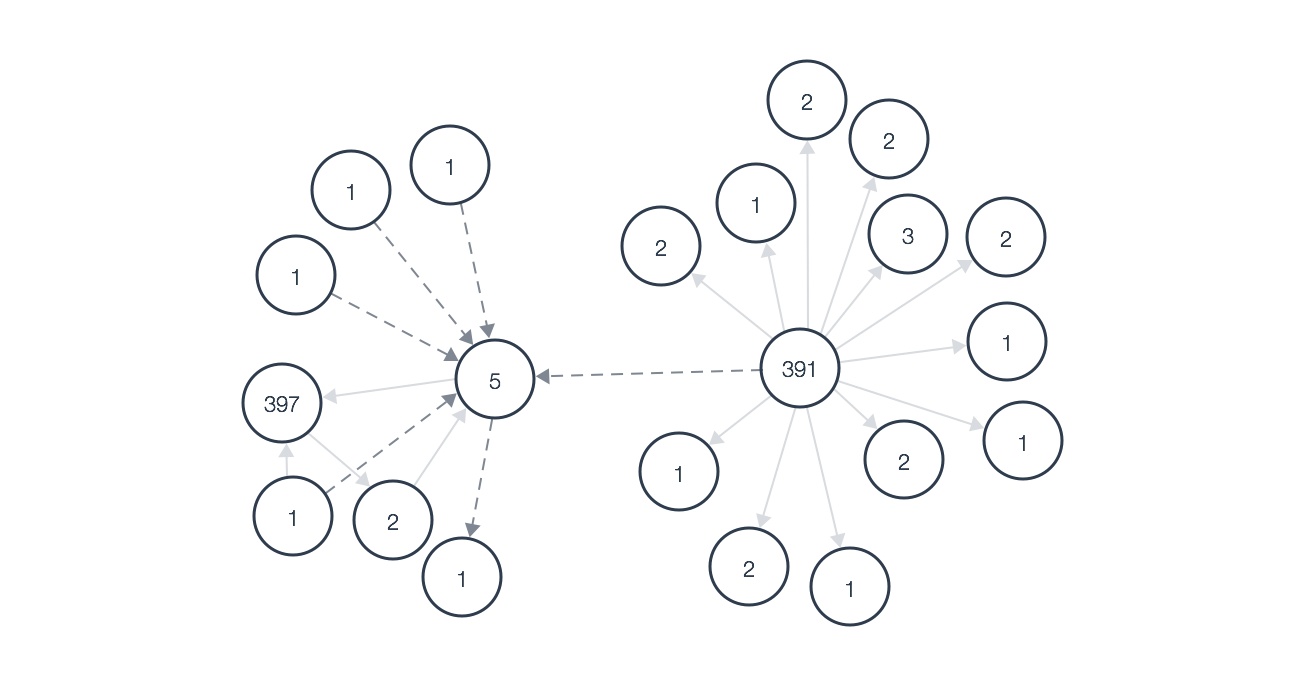
A group of clusters and corresponding relationships.
Another entry point to clustering besides bitcoin addresses is through categorization. Categories are a set of clusters associated with one another in some way.
Categories allow a deeper dive into the blockchain’s treasure trove of information. This can show what people are specifically using bitcoin for.
Someone using Coinalytics, for example, can identify clusters of addresses using bitcoin for gambling simply by selecting the “gambling” category within the platform.
Clustering and categories provide relational knowledge for bitcoin addresses. This allows for deep intelligence about the history of a user or an organization, which we call an entity.
Another term to understand is tagging. Tags are additional information associated with an address or a cluster within the Coinalytics platform.
Tags can provide specific address or cluster insight on things like double spending, number of transactions and total bitcoin balance. In essence, this gives bitcoin addresses a profile, or set of attributes associated with it.
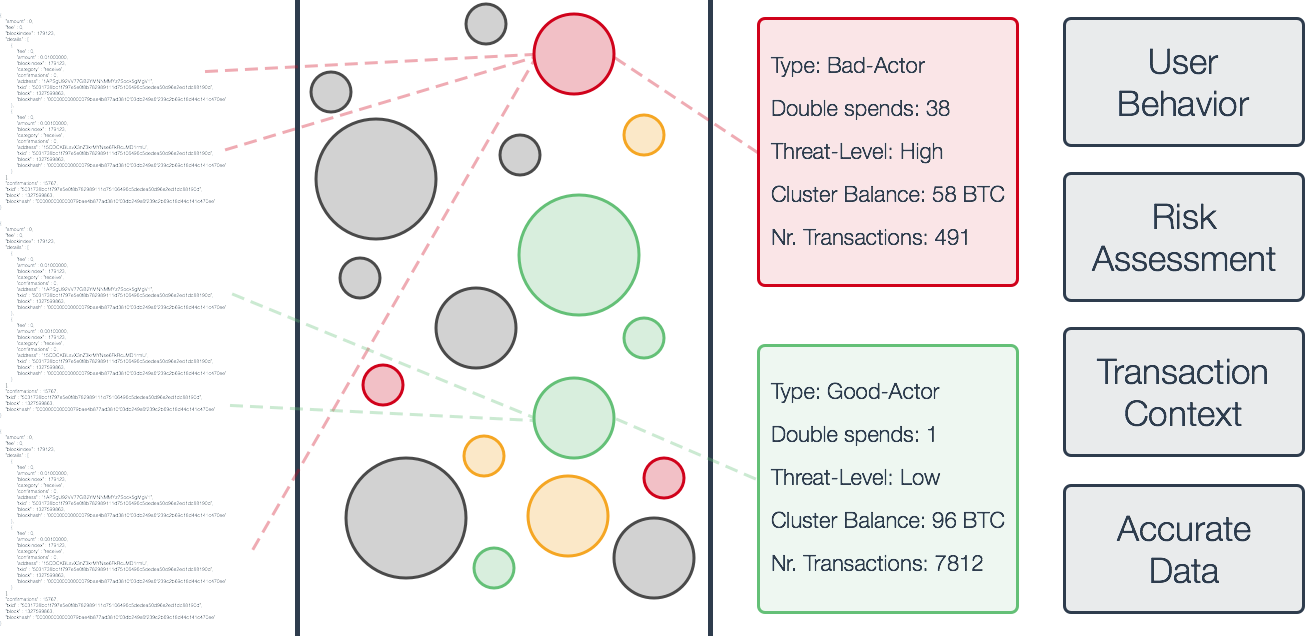
How Coinalytics turns blockchain data into actionable information.
With clusters, categories and tagging combined to create profiles there is an opportunity for real-world applications for leveraging the public record of blockchain data.
As a comparison, IP addresses are often used in traditional IT networks to identify users or organizations. However, there is generally a one-to-one relationship between IP addresses and entities.
With bitcoin, clusters are important to build profile information for entities. This is because bitcoin lacks one-to-one correlation with addresses.
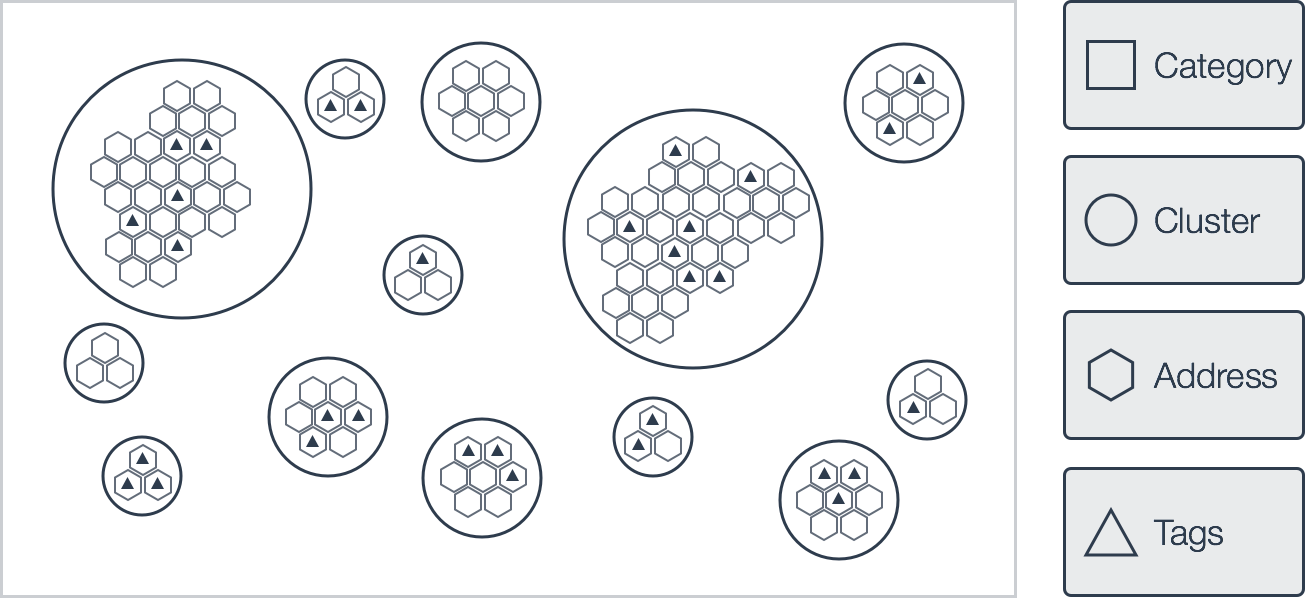
Overview of blockchain hierarchy and labeling.
Blockchain relationships create an identifiable entity profile. In building these profiles, the Coinalytics platform can analyze an address, associate it with a cluster and provide deeper blockchain information than available previously.
With these tools, it is also possible to look inside specific transactions – and there are many real world applications for this.
One of these, for example, is the establishment of a global payment record of historical transactional data that is clearly defined by entities. This information can allow anyone to better understand exactly where bitcoin comes from, and where it is going.
This also enables bitcoin-accepting merchants the ability to evaluate their competitive landscape by analyzing clusters of transactions from a rival firm.
These are just two examples of many practical use cases for examining the bitcoin ecosystem via clusters.
The Coinalytics platform shows that the blockchain in effect builds identifiable profiles. The data just needs to be tied together in order to translate it into digestible information. Our aim is to leverage data to build a blockchain-based knowledge platform and build useful products around it.
For more on how Coinalytics is leveraging blockchain data, subscribe below for updates to our blog.