Blockchain Investigation: Tracking Moolah Bitcoin Addresses
In a recent blog post, the digital currency platform Moolah announced its closure, with plans to file for bankruptcy.
The announcement cited Moolah was experiencing financial problems, stating, “money came in, far more money went out.”
Moolah and MintPal operator Moopay LTD has announced that it will seek bankruptcy protection http://t.co/8O05h5RAXD
— CoinDesk (@coindesk) October 15, 2014
Moolah has publicly stated their intention to return all customer-owned funds.
The community, by using the public blockchain ledger, is able to track where all Bitcoin-related balances are located.
Thanks to all who notified us of the #mintpal coins. https://t.co/nH85upTbMW We are vigilant on not let them pass through #Bitstamp
— Bitstamp (@Bitstamp) October 20, 2014
Members of the Bitcoin community have a responsibility to make sure that fraud is kept to a minimum. Value exchanged on the blockchain by companies that affect the viability of cryptocurrencies should be tracked if ethical questions come into play.
We’ve done some surface level research into Moolah on the Bitcoin blockchain, and have identified a trail from known addresses used by the company.
We started by using 17ztgkcaZbs4VFrAswMQGvnNDEtn47rsmu taken from a Reddit thread regarding Moolah/MintPal to begin our look into related addresses. This address seemed most relevant for analysis because it previously held 3,701 BTC; now it is empty.
We utilized two tools for visually analyzing address relations, both under active development at Coinalytics. The first is a relation graph viewer, and the second is an address tracker.
Using the relation graph viewer, we can see a network of relations to the address in question.
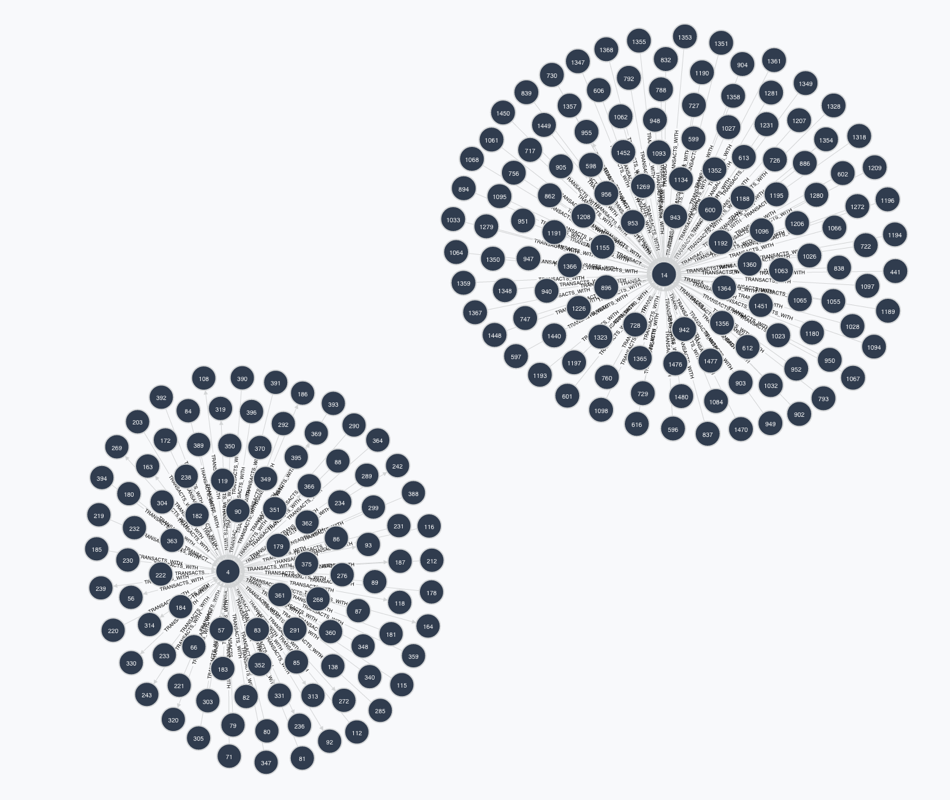
One example of a distinctive visual pattern from the relation graph is the ‘control address’ pattern.
The ‘control address’ pattern resembles a flower with many petals.
Another distinctive visual pattern is a ‘transfer point’ pattern.
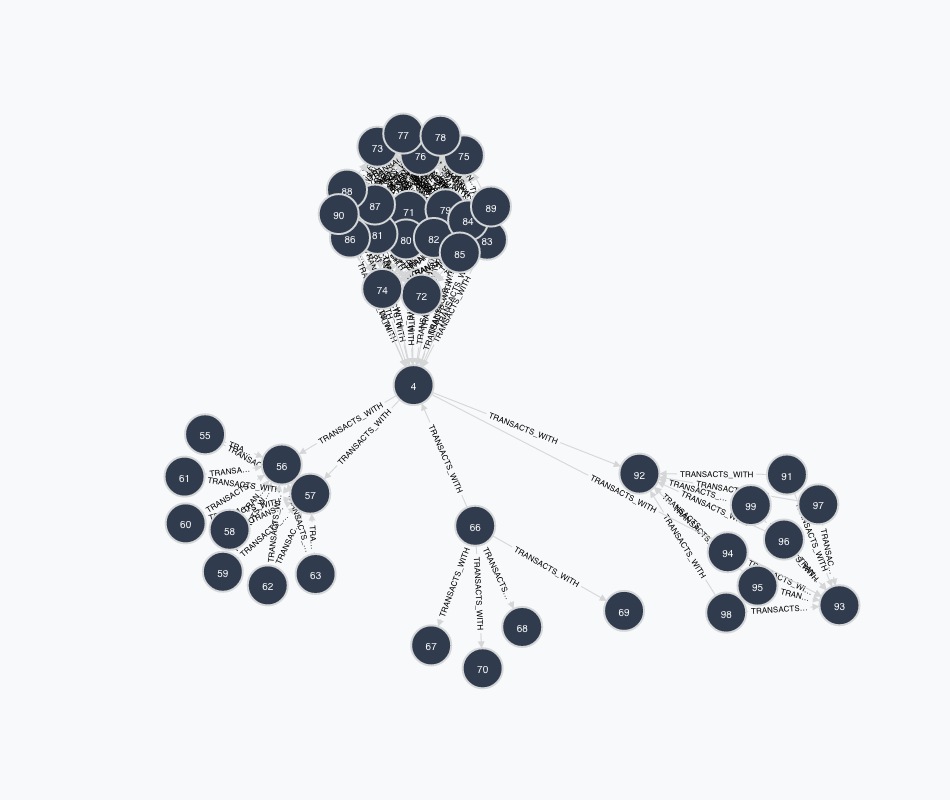
In the ‘transfer point’ visual pattern, we can see how a particular address is used as a transfer point from a large number of input addresses. In this particular instance, Bitcoin is transferred to four addresses in particular.
In addition to the relation graph, we focus on address tracking during our visual analysis. One problem with visualization from the originating address is that the BTC outflow is to more than 250 separate addresses.
In our first diagram of transaction flow from this address, we focus on the ten addresses that received the highest quantity of Bitcoin from the original address. These ten addresses received more than 1,600 of the original 3,701 BTC being traced.
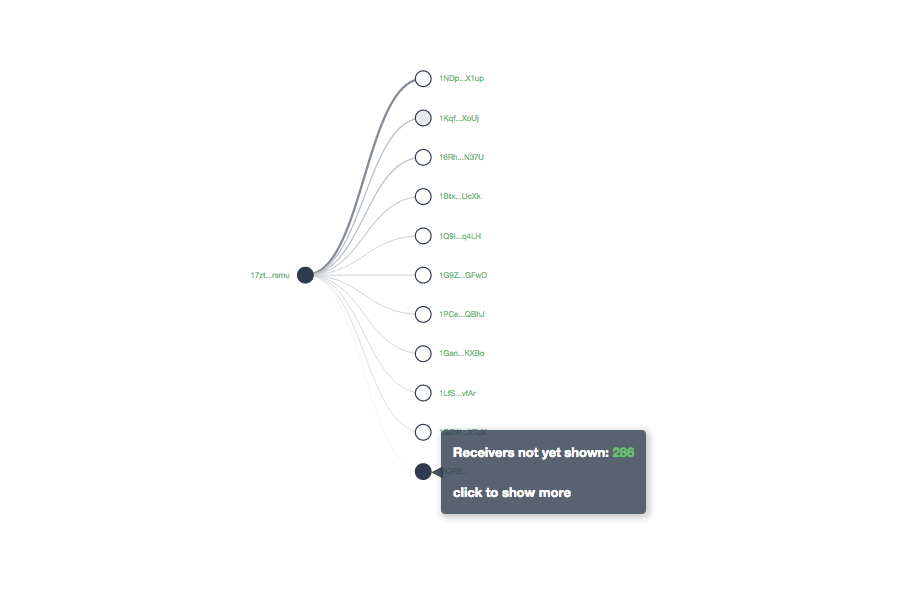
Using the top recipient address, we traced BTC through sixty-two transactions.
There are about 300 address that received funds directly from the original suspect address. Based on the analysis of the top recipient address, we have identified two accounts currently holding over 700 BTC. Each of these addresses received large bitcoin balances via the top recipient address.
The majority of transactions in each case took place on October 14, with the final transactions occurring early October 15.
Address: 17YMsasWwEuSrBN5SFpK5CLrgE7VWeKmc7
Current Balance: 346 BTC
Last Transaction: October 15
Distance from suspect address: 62 addresses
Address: 1BaconjAtmrT663X4cwP2zvC6kez2pRAWk
Current Balance: 491 BTC
Last Transaction: October 24
Distance from suspect address: 59 addresses
In one case along the transaction path, funds flow through 21 different transactions at one time.
This implies the transactions were each consumed before achieving transaction confirmation threshold, indeed even prior to a single block confirmation. The Coinalytics scoring system penalizes transactions that exhibit this property.
We provide a glimpse at how these tools are used in conjunction with the Coinalytics trusted fast transaction scoring system. We use scoring in real-time that can demonstrate forensics through relation graph and transaction flow analysis.
The community should be able to know when Bitcoin companies are suspected of fraudulent activities by misusing customer balances or otherwise improperly spending funds. Fortunately, these issues can be examined via the Bitcoin blockchain.
Transaction relationships associated with Bitcoin from addresses is possible, but isn’t easy to understand when looking at the blockchain directly.
This is why we’re trying to tackle this issue with our Address Tracker. There should be an easy way to see where Bitcoin flows through the public blockchain. This is why we have developed this early beta Address Tracker to help follow Bitcoin in this scenario.
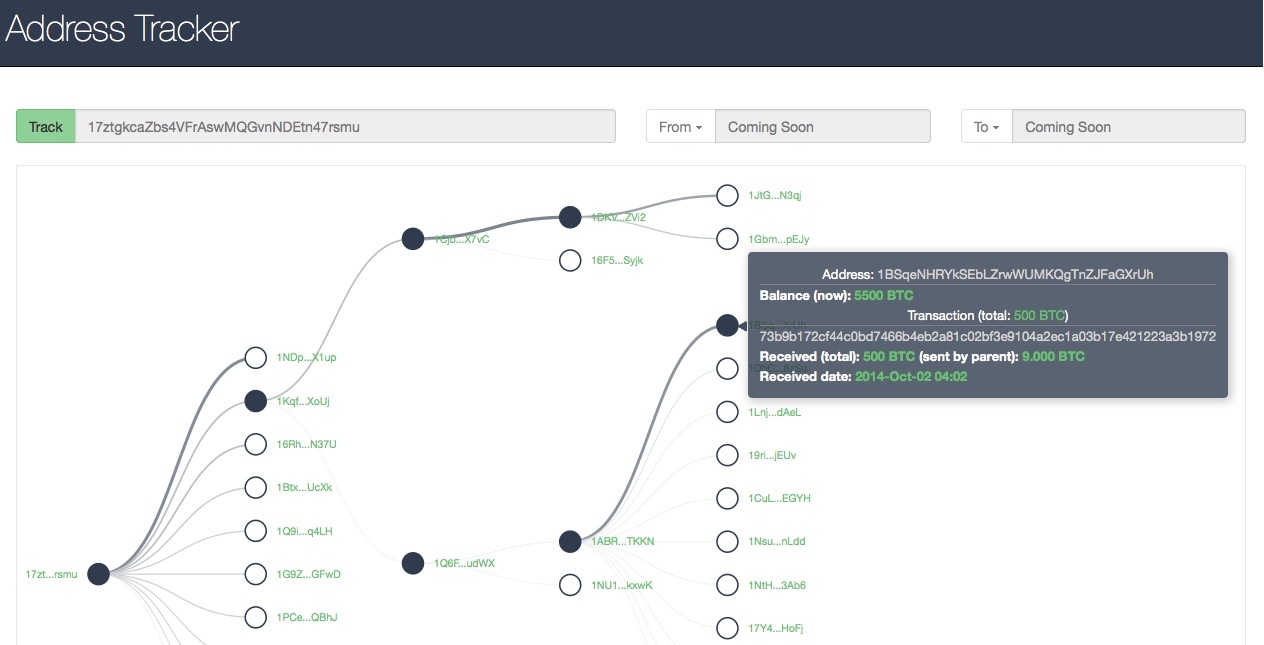
The Coinalytics Address Tracker allows anyone to enter in an address and look at how it relates to other addresses in a specific period of time. The Tracker also shows identifying data about Bitcoin addresses such as balance information.
We’re working hard to perfect the Tracker, and look forward to feedback from the community on how we can make it better.
For more updates from Coinalytics, sign up below to receive updates on our blog.