Visualizing Silk Road 2.0 Bitcoin Relationships
On November 6, 2014 the FBI, working with the US Attorney for the Southern District of New York, shut down Silk Road 2.0.
An illicit marketplace, Silk Road 2.0 operated in a similar fashion as the original Silk Road, which was seized by the FBI in October 2013. Both these sites utilized the onion routing browser Tor for anonymity. Illegal goods were for only for sale in cryptocurrencies such as bitcoin.
According to a published complaint from the US Attorney’s Office, Silk Road 2.0 was conducting $8m in business per month.
After an analysis post following the trail of MintPal funds was posted on this blog, an originating point to look at Silk Road 2.0 transactions was tweeted to @Coinalytics:
@coinalytics interesting mintpal post, please to be looking at http://t.co/orXsB2Rjjt and see if you can connect other dots?
— cazalla (@cazalla662) November 11, 2014
The link tweeted leads to an examination of the US Attorney’s complaint regarding the operations of Silk Road 2.0.
The examination discusses 1rundZJCMJhUiWQNFS5uT3BvisBuLxkAp, alleged to be a deposit address for Silk Road 2.0.
This address is alleged to be the ‘Bitcoin Address-1’ noted in the original complaint; where “on or about September 10, 2014, hundreds of transfers were made to that address, for a total of approximately 2,987.8 Bitcoins,” according to the document.
The 1rundZJCMJhUiWQNFS5uT3BvisBuLxkAp address currently has a 2967.8 BTC balance, 20 BTC less than indicated in the complaint. It has a large number of transactions on September 10, 2014.
This was a starting point for Coinalytics to look at associations related to this address.
The initial data that came back was a large network of clusters. As discussed here previously, Coinalytics uses clustering to identify addresses owned by persons or entities.
In this instance, here are close cluster relationships with 1rundZJCMJhUiWQNFS5uT3BvisBuLxkAp.
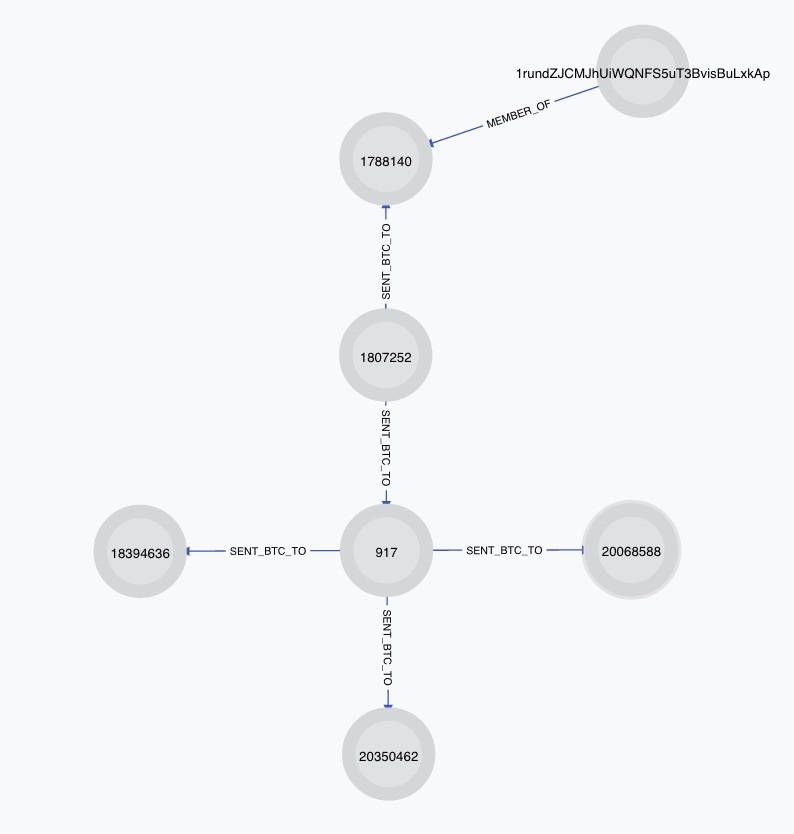
The numbers within clusters are IDs Coinalytics uses to track each bitcoin address relationship. Note the transaction flow from cluster to cluster.
Cluster 917, for example, is composed of nearly 350,000 addresses; yet this visual flow enables clean view of entity relationships.
When expanded to the 200 closest relationships, a complex network of clusters appear – 1rundZJCMJhUiWQNFS5uT3BvisBuLxkAp is highlighted in red.
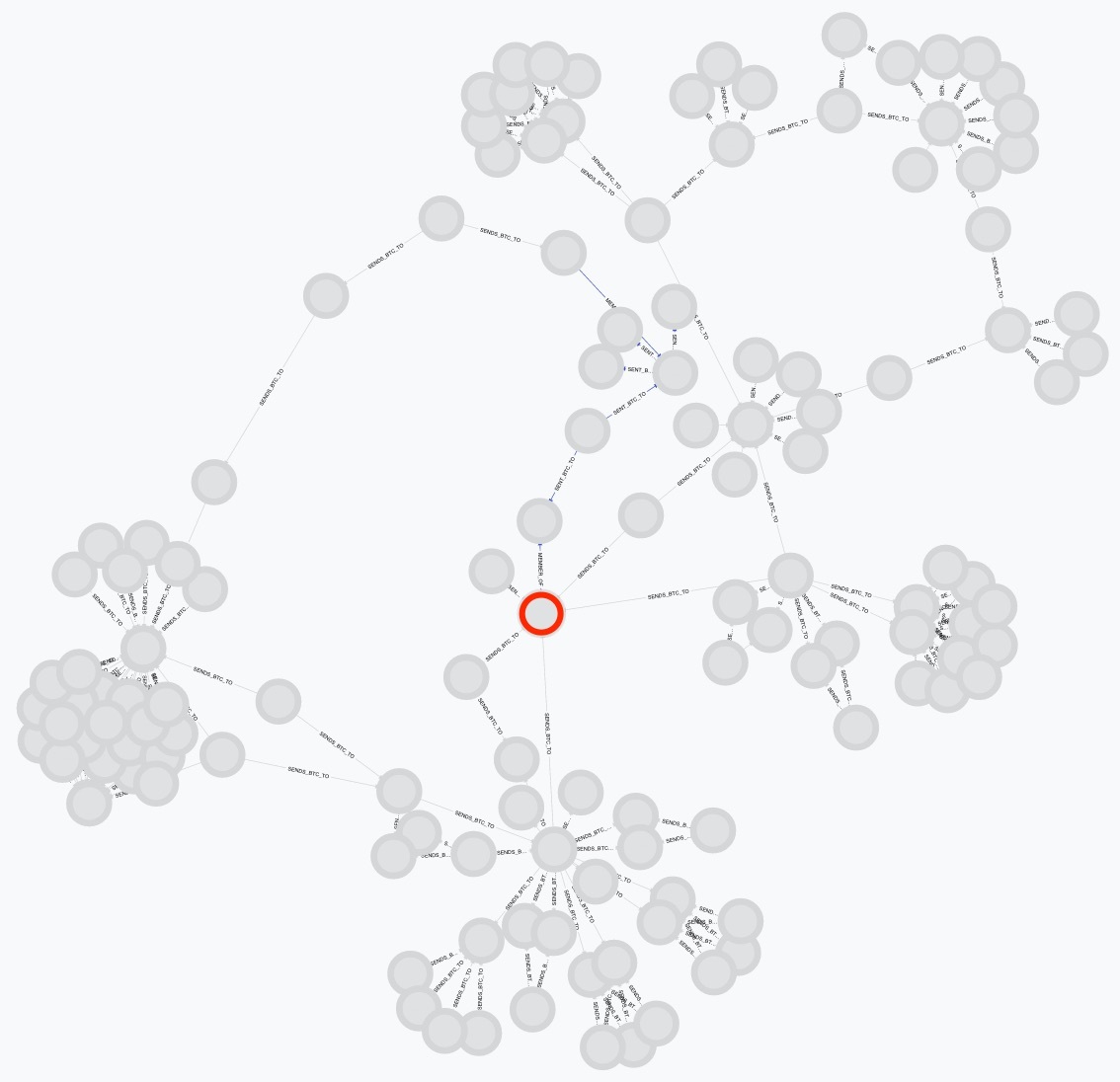
If bitcoin address 1rundZJCMJhUiWQNFS5uT3BvisBuLxkAp was in fact part of the alleged $8 million per month Silk Road 2.0 illicit marketplace operation, it’s possible to track down many interesting relationships via clustering.
For more on how Coinalytics can track blockchain data, subscribe below for updates to the blog.